HEAD-START TRAINING
Bringing a new puppy home can be one of the most exciting and rewarding experiences of your life. Puppies are full of energy, love, and a whole lot of cuteness. However, with all that excitement comes a lot of responsibility. Proper puppy training is essential for raising a happy and well-behaved dog.
At K9OT.COM, we understand the challenges of puppy training and are here to help. Our team of experienced trainers can provide you with the guidance and support you need to raise a well-adjusted and obedient puppy. In this article, we'll share some tips and tricks for new puppy training that will set you and your furry friend up for success.
- Establish a routine: Dogs are creatures of habit, so establishing a routine early on can make life easier for both you and your puppy. Start by setting regular times for meals, playtime, training, and bedtime. Dogs thrive on routine, and it can help them feel more secure and less anxious. Try to stick to the routine as much as possible, but remember to be flexible and adjust it as needed.
- House training: House training your puppy can take some time and patience, but it's an important step in raising a well-behaved dog. Start by taking your puppy outside to the same spot every time they need to go potty. This will help them understand that outside is where they should go. Praise your puppy and give them a treat immediately after they finish their business outside. This positive reinforcement will help them associate going potty outside with good things. (If your puppy has an accident inside, clean it up immediately with an enzyme cleaner to eliminate the scent. Dogs have a strong sense of smell, and if they can still smell their urine or feces, they may be more likely to go potty in the same spot again. Never punish your puppy for accidents, as this can make them fearful of you and cause more problems down the line.)
- Socialization: Socialization is an essential part of raising a well-adjusted dog. Puppies that are not properly socialized can develop fear and anxiety, which can lead to behavioral problems in the future. Introduce your puppy to new people, animals, and environments early on to help them develop confidence and trust. (Take your puppy on walks in different neighborhoods, to the park, and to pet stores. This will expose them to new sights, smells, and sounds, and help them learn how to handle different situations. Enroll your puppy in puppy classes, which are designed to help puppies learn to interact with other dogs and people in a safe and controlled environment.)
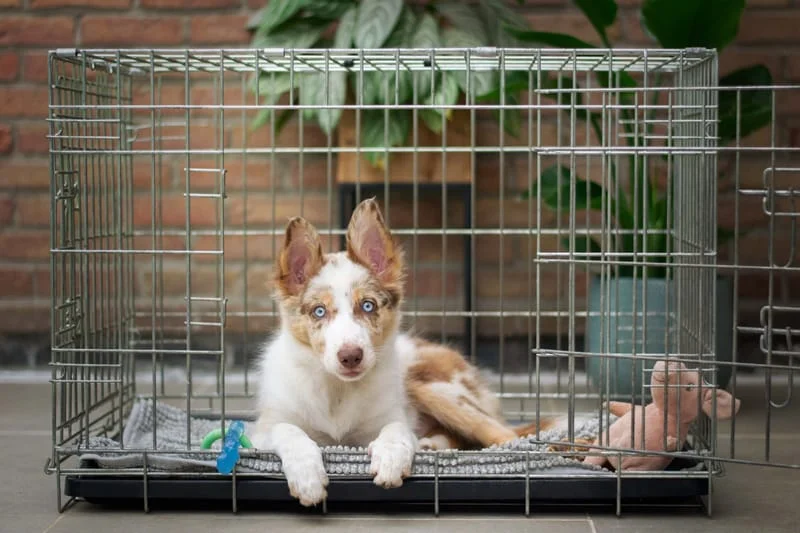
- Crate training: Crate training can be a helpful tool for both you and your puppy. A crate provides a safe and secure space for your puppy to relax and can prevent destructive behavior when you're not home. However, it's important to introduce the crate gradually and make it a positive experience for your puppy. (Start by placing the crate in a common area of your home and leaving the door open. Put some comfortable bedding and a few toys inside, and let your puppy explore it on their own. Once your puppy is comfortable going in and out of the crate, start closing the door for short periods while you're home. Gradually increase the amount of time your puppy spends in the crate, but never leave them in there for more than a few hours at a time.)
- Basic commands: Teaching your puppy basic commands like sit, stay, and come can make your life much easier. Start with one command at a time and use positive reinforcement to encourage your puppy to obey. When your puppy responds correctly, praise them and give them a treat immediately. Be patient and consistent with your training, and never use physical punishment or force. (Once your puppy has mastered the basic commands, you can move on to more advanced training, like leash walking or agility training. Remember to always keep training sessions short and positive, and to end them on a high note.)
- Chew toy training: Puppies love to chew, and it's important to provide them with appropriate chew toys to prevent destructive behavior. Train your puppy to chew on their toys by providing them with a variety of textures and tastes. Try different types of toys, like rope toys, rubber toys, and soft toys, to see what your puppy likes best
At K9OT.COM, we are passionate about puppy training and are here to help you and your furry friend thrive. Contact us today to learn more about our training services and start your journey towards a well-behaved and obedient puppy.